


If you stay up to date with the current gaming market, you’ll know that there’s a strange tussle between franchise fans and game developers. Gamers seem to want it all: an easy game that’s hard.
Take the release of Diablo III in 2011. That game saw millions of people piling into forums to complain that the combat dynamics were simply too difficult. Players reported not being able to progress, causing Blizzard to reduce the difficulty a few months later, along with sorting out other problems, like the miscalculated auction house.
What this event represented was a sea-change in the relationship between developers and player bases. Historically, developers beavered away in private, released games, and then moved on to the next project. However, that’s not what happened after 2010. Instead, the industry dynamic changed, with players essentially bargaining for easier games that would stretch them to the maximum, as had been the aim before.
This fundamentally led to a dumbing down of games. No developer could release a game like Tetris today and make it into a commercial success. It was simply too difficult.
For gamers interested in training their minds, this trend is a problem. While some games offer challenges, it doesn’t quite feel like it’s on the same level as it was in the past. Plus, games have become less “intellectual” over time. Modern titles prefer to focus on 3D graphics rather than on probing players’ mental acuity.
The purpose of this post is to look at some of the ways old games train the brain. Let’s take a look.
Memory And Pattern Recognition
One of the primary ways old games trained the brain was through memory and pattern recognition. Players had to remember distinct sequences and find the answers to riddles and codes in the environment.
The reason for this was how developers viewed PC games. Instead of seeing them as a push-button experience for the masses, they viewed them as a kind of extension of cryptic puzzles and board games, asking players to solve somewhat complex challenges.
Just look at Microsoft’s decision to include Minesweeper in Windows 3.11. It’s hard to imagine such a game being mainstream today, and even the tech giant itself now omits it from new Windows releases, forcing players to seek out third-party providers.
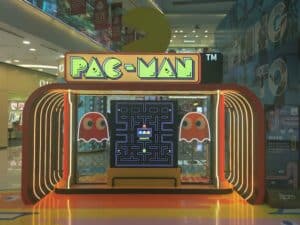
Pac-man and Tetris were also games that forced you to use memory and pattern recognition. You had to do things in the right sequence, otherwise, you would lose. For children, the effects on enhanced memory and pattern recognition were profound.
Problem-Solving
Other games focused more on problem-solving, getting players to think through complicated puzzles and riddles to proceed. By today’s standards, these were exceptionally challenging. Players would often run around for hours, trying to work out what they needed to do.
A good example of this phenomenon in action was the PC game that was released alongside the film, Independence Day, in 1998. The title was so cryptic and mysterious that only a few people ever completed it on their own. Everyone else simply followed guides when they became available. The idea was to explore an alien ship, but it proved almost impossible to progress from one stage to the next.
Maniac Mansion and Monkey Island are good examples of games with a similar approach. Players had to gather clues and consider riddles deeply to proceed to the next step. And before the invention of the mature internet, they couldn’t just look up the answer online.
Patience
Another thing older games taught was patience. Players would often struggle for hours on the same level, repeating it over and over until they completed the challenge.
Super Mario Land on Nintendo Gameboy was a good example of this. Players would often have to go back to the start of the level and try all over again when falling foul of various bosses and enemies along the way. The game was genuinely difficult, particularly for its target age group, forcing players to get used to the idea of failure.
Titles like Super Meat Boy on Steam tried to resurrect this tradition later, forcing players to continually repeat the same encounters over and over. Players had to stick it out and keep trying if they wanted to complete titles. It wasn’t something you could cheat your way through.

Focus
Old games also trained the brain by requiring comprehensive focus, similar to newer titles. Games like Space Invaders and Galaga needed you to keep your eyes glued on the screen at all times unless you wanted to suddenly see “Game Over” emblazoned across the screen.
This type of focus can actually help your brain concentrate. Forcing yourself to pay attention to a game and nothing else is an excellent way to get your brain used to the idea of concentrating on something in today’s distracted world.
Creativity
Many older games also require you to use your imagination because it simply wasn’t possible to represent all the details onscreen. Text-based titles, like Zork, made you approach them in a similar way to a book, where most of the action takes place in the mind.
Even into the modern era, many fantasy games continued this format. Graphics lagged significantly behind other genres, with text-based dialogue and artificial battle encounters interrupting the world-based flow of the game, making everything feel canned and piecemeal but also leaving more to the imagination.
Resource Management
Finally, many games of the past trained the brain by encouraging better resource management. Players had to think carefully about how much money or material they devoted to particular projects.
Age of Empires II was a good example of this in action. Players had to carefully balance four medieval resources: gold, stone, wood, and food. If you didn’t have enough food, you couldn’t produce more villagers to collect the other resources. But equally, if you didn’t have gold, you couldn’t equip the most powerful military units to defend your territory.
Resource management also played a role in many other games, like Total Annihilation and SimCity. Players had to constantly keep an eye on their finances and avoid living beyond their means.

