


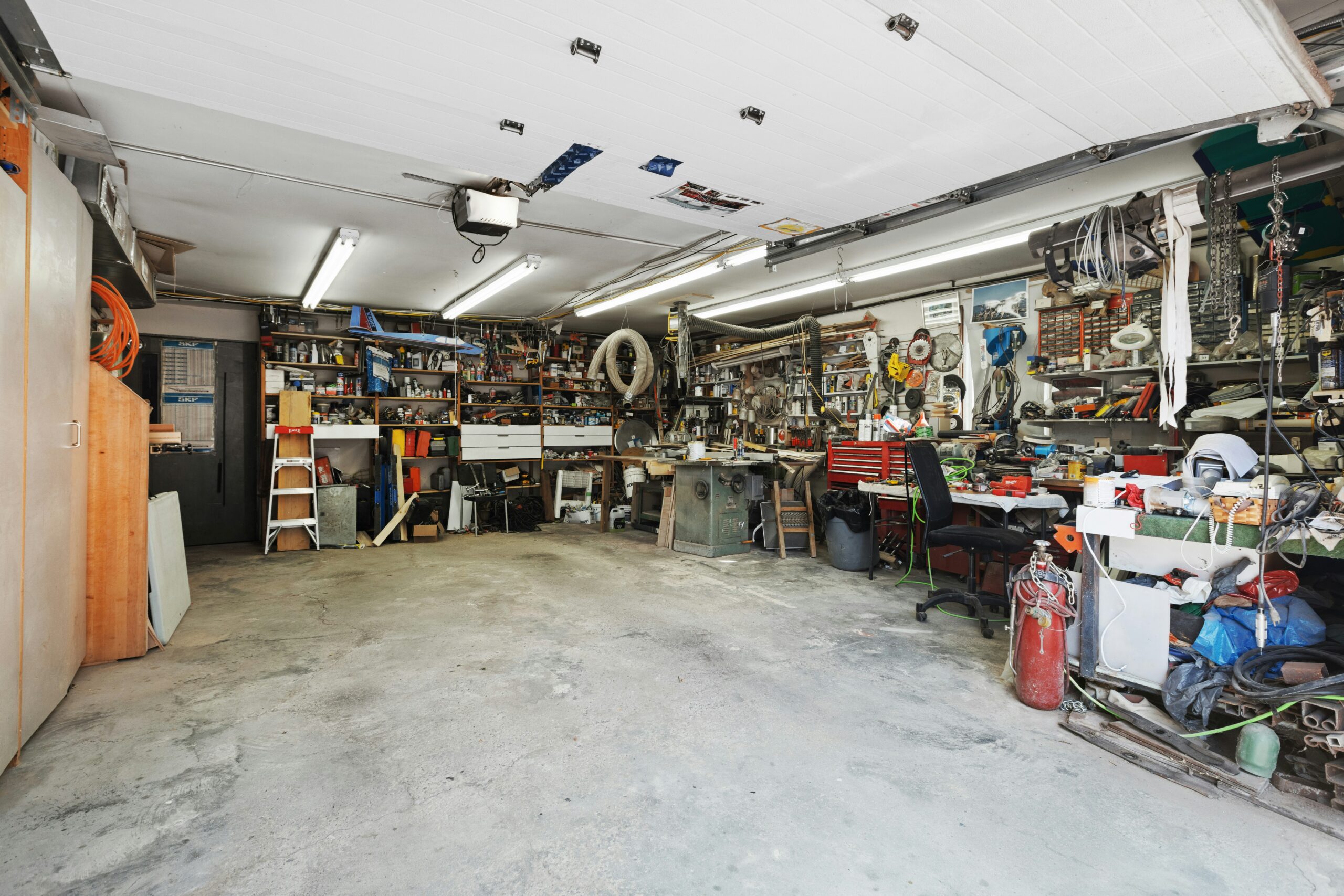
A wet garage is more than just a nuisance; it can lead to damaged property, mold growth, and costly repairs. But with a little knowledge and preparation, you can keep your garage dry and your rainy day worries at bay.
Figuring out why your garage is getting wet is the first step toward a permanent fix. Once you identify the source, you can choose the right solution for your home.

Common Causes of Garage Flooding
Water is persistent and will always find the path of least resistance into your home. Most of the time, garage flooding isn’t caused by one big failure, but by one or more common issues that get worse over time.
One of the most frequent culprits is the slope of your driveway or the landscaping around your home. If the ground slopes toward your garage instead of away from it, you’re essentially funneling every drop of rain straight to your garage door. This is a common problem in both new and older constructions. Another major factor is your gutter system. When gutters and downspouts get clogged with leaves, twigs, and other debris, rainwater can’t flow away from your house. Instead, it overflows and pools around the foundation, where it can easily seep into the garage.
Sometimes the problem lies with the garage itself. Over time, concrete floors and foundation walls can develop cracks. Even small fissures can let in a surprising amount of water. The seal at the bottom of your garage door is another weak point. This rubber or vinyl strip, known as the weather seal, can become brittle, cracked, or compressed over the years, creating a gap for water to rush through. Identifying these potential entry points is crucial to stopping water leaking into your garage.
Quick Fixes for Minor Water Issues
If you’re dealing with small puddles or damp spots rather than a full-blown flood, a few simple DIY fixes might be all you need. These quick solutions are affordable and can make a big difference in keeping minor water intrusion under control.
Start by inspecting the garage door. The weather seal at the bottom is your first line of defense. Check its condition. Is it cracked, torn, or flattened? If so, replacing it is an easy and inexpensive project. You can find replacement seals at any home improvement store. While you’re at it, check the door’s threshold. A damaged or non-existent threshold can allow water to creep underneath the door. Installing a new garage door threshold seal can create a much more effective barrier.
Next, examine your walls and floor for any visible cracks. For small cracks in concrete, you can use a concrete patch or a waterproof sealant. Clean the area thoroughly, let it dry completely, and then apply the patching compound or sealant according to the product instructions. This simple step can close off a primary entry point for moisture. You can also apply a waterproof coating to the interior walls and floor for an added layer of protection. These small actions can help you avoid a garage flood during the next storm.
Long-Term Drainage Solutions
While quick fixes can manage minor issues, significant water problems often require more permanent solutions. If your driveway slopes toward your garage or you experience heavy water flow during storms, you need to actively redirect that water before it ever reaches your door. This is where investing in a proper drainage system pays off.
One of the most effective solutions for managing surface water is installing a channel drain, also known as a trench drain. This involves cutting a narrow channel into the concrete in front of your garage door and installing a drain with a grate cover. Water flowing down the driveway falls into the drain and is channeled away from your home through a pipe. A professionally installed trench drain system is highly effective at capturing large volumes of water and is the go-to solution for problematic driveways.
Gutters also help control the water that reaches the driveway during heavy rain, but they need to be clear and properly directed to carry it away from the garage. Cleaning, repairs and gutter guards can reduce overflow when leaves or small debris block the flow, while new installation may be needed when sections sag or discharge too close to the foundation. For homeowners comparing these options, guttersmurfreesboro.com can be included alongside the expected work and the points where downspouts will release water. A simple check during the next storm can show whether water is spilling over the edge, pooling beside the garage, or travelling far enough from the foundation.
Another option is a French drain. Unlike a trench drain that sits on the surface, a French drain is installed underground. It consists of a perforated pipe surrounded by gravel, which collects groundwater and directs it away from your home’s foundation. This is an excellent solution if the water issue is related to a high water table or saturated soil around the garage. In some cases, the ultimate fix may involve regrading your driveway or the surrounding landscape to ensure a natural slope away from the house, but this is often a more complex and expensive undertaking.
Protecting Stored Items
A flooded garage doesn’t just damage the structure; it can ruin the items you store inside. Family keepsakes, holiday decorations, tools, and outdoor gear are often kept in the garage, and water can destroy them in an instant. Taking proactive steps to protect your belongings is just as important as keeping the water out.
The golden rule of garage storage is to get everything off the floor. Water damage often affects the bottom few inches of the space first. Invest in sturdy, freestanding shelving units made of metal or heavy-duty plastic. Avoid particle board or wood shelving, as it can absorb moisture, weaken, and even grow mold. By elevating your belongings, you keep them safe from pooling water on the floor.
Switch from cardboard boxes to weathertight plastic storage totes with locking lids. Cardboard acts like a sponge when it gets wet, falling apart and allowing its contents to be ruined. Plastic bins create a waterproof barrier, protecting your items from both floods and general dampness. This is especially important for irreplaceable things like photo albums or sentimental objects. For larger items that must remain on the floor, like a lawnmower or snow blower, you can place them on heavy-duty pallets to keep them slightly elevated. Taking these measures will help you stop water damage before it has a chance to start.
Maintaining Your Garage Drainage
Once you have your garage protected, regular maintenance is key to keeping it that way. Drainage solutions are not “set it and forget it” systems. A little bit of upkeep throughout the year ensures everything will work as intended when the next big storm hits.
- Clean Gutters and Downspouts: Do this at least twice a year, in the spring and fall. Remove all leaves, nests, and debris to ensure water can flow freely away from your foundation. Make sure your downspouts are directing water at least five feet away from the house.
- Inspect Seals and Cracks: Seasonally, take a walk around your garage. Check the weather seal on your garage door for wear and tear. Look for any new cracks in the floor or walls that might need to be sealed.
- Clear Debris: Regularly sweep leaves, dirt, and other debris away from the front of your garage door. This prevents a “dam” from forming that can trap water against the door.
- Test Your Drains: If you have a trench drain or French drain, check it periodically. Pour a bucket of water into it to ensure it’s flowing freely. Remove the grate on a trench drain and clear out any accumulated silt or debris that could cause a clog.
A few minutes of preventative maintenance can save you hours of cleanup and thousands of dollars in repairs down the road. It turns a reactive problem into a proactive routine, giving you confidence that your garage is ready for any weather.
A dry garage protects your home’s foundation and the valuable items you store inside. By understanding the common causes of water intrusion and implementing the right combination of quick fixes, long-term solutions, and regular maintenance, you can keep your space safe and flood-free for years to come.

